


Car Seat Safety
Keeping Your Child Safe on the Road
CA Laws: Rear-facing, forward-facing, booster seats and beyond:
English and Spanish
Common questions:
What is the best car seat?
The simple answer is: “The one that fits the child, fits the vehicle, and that the caregiver can use correctly every single time.”
Car seats and booster seats should be selected based on the child’s
- Age - Weight - Height - Developmental level
Find the best car seat for your child here
Where is the most reliable place to purchase car seats?
The simple answer is the Manufacturer. Unfortunately, counterfeit brand-name car seats have been discovered at big-box stores and major online retailers. It is crucial to ensure that the car seat is authentic (crash-tested by the manufacturer) and includes all necessary registration paperwork.
Generic and aftermarket car seats are unsafe because they are not properly crash-tested by reputable manufacturers.
Some people may not realize they have purchased a counterfeit car seat until they try to register it and find that the serial numbers are incorrect.
Do car seats expire?
The answer is YES.
Look for a small white sticker on the seat that contains information such as the seat's manufacture date, serial number, model number, and expiration date.
Why Registration Is Important for Recalls
Registering your car seat is one of the most important safety steps parents can take. When a car seat is registered, the manufacturer can contact you directly if there is ever a recall — even years later. Parents who don’t register their seat may never learn about a recall, which means a safety issue could go unnoticed.
If a car seat is recalled and you’re registered, the manufacturer will send clear instructions on what to do next. This may include receiving free replacement parts, a repair kit, or in some cases, an entirely new seat. If the seat is not registered, the manufacturer has no way to reach you, and you may continue using an unsafe seat without realizing it.
Registration takes less than two minutes and ensures you stay informed about any updates that affect your child’s safety.
What to know about second-hand car seats.
History of the car seat?
Was the car seat in any collision?
Does the car seat appear to be in good working order (no parts missing, no deformities, no cracks)
Are the labels present?
Has the car seat expired?
If recalled, has the recall been corrected?
(CPSTs can’t certify a car seat as safe)
Quick helpful tips:
Download the car seat’s PDF manual and save it to your phone. Use the search function to quickly find keywords and access the information you need faster.
Scan the QR codes on the car seat with your phone. These often link to installation videos and other helpful resources.
Set a calendar reminder on your phone for the car seat’s expiration date to ensure you stay up to date.
Ensuring your baby's safety while traveling is a top priority, and proper car seat use is one of the most important ways to protect them.
A rear-facing car seat is considered the safest option for a newborn because it distributes crash forces more evenly across their body, protecting their delicate neck and spine by cradling their head in the event of a collision, especially in a frontal impact, where a baby's disproportionately large head would otherwise be thrown forward with great force if facing forward.
Here’s an overview of key car seat safety tips and best practices:
1. Choosing the right Car Seat
Use a rear-facing car seat from birth until at least age 2, as this provides the best protection for your baby’s head, neck, and spine.
(California Law requires children to be in a rear-facing car seat at least age 2)
Check weight and height guidelines for the car seat to ensure it’s appropriate for your baby's size.
Select a car seat that fits well in your vehicle; not all car seats are compatible with all cars.
2. Proper installation
Carefully follow the manufacturer’s instructions when installing the car seat. Many fire stations, police departments, and local community centers offer free car seat installation checks.
Ensure the car seat is securely installed with minimal movement (less than one inch from side to side).
Use either the vehicle’s seat belt or the LATCH system, but not both simultaneously unless specified by the car seat manufacturer.
3. Correct positioning
Place the car seat in the back seat of your vehicle. (Perception is the rear center seat is the safest. However, some rear center seating positions are not usable or compatible with the car seat and/or the vehicle manufacturers).
Ensure that the car seat reclines at the correct angle to keep your baby’s airway open.
Adjust the harness straps so they are snug (you should not be able to pinch any excess fabric).
Rear-facing car seat harness straps should be below or under the shoulder.
The chest clip should be positioned at armpit level.
4. Avoid common mistakes
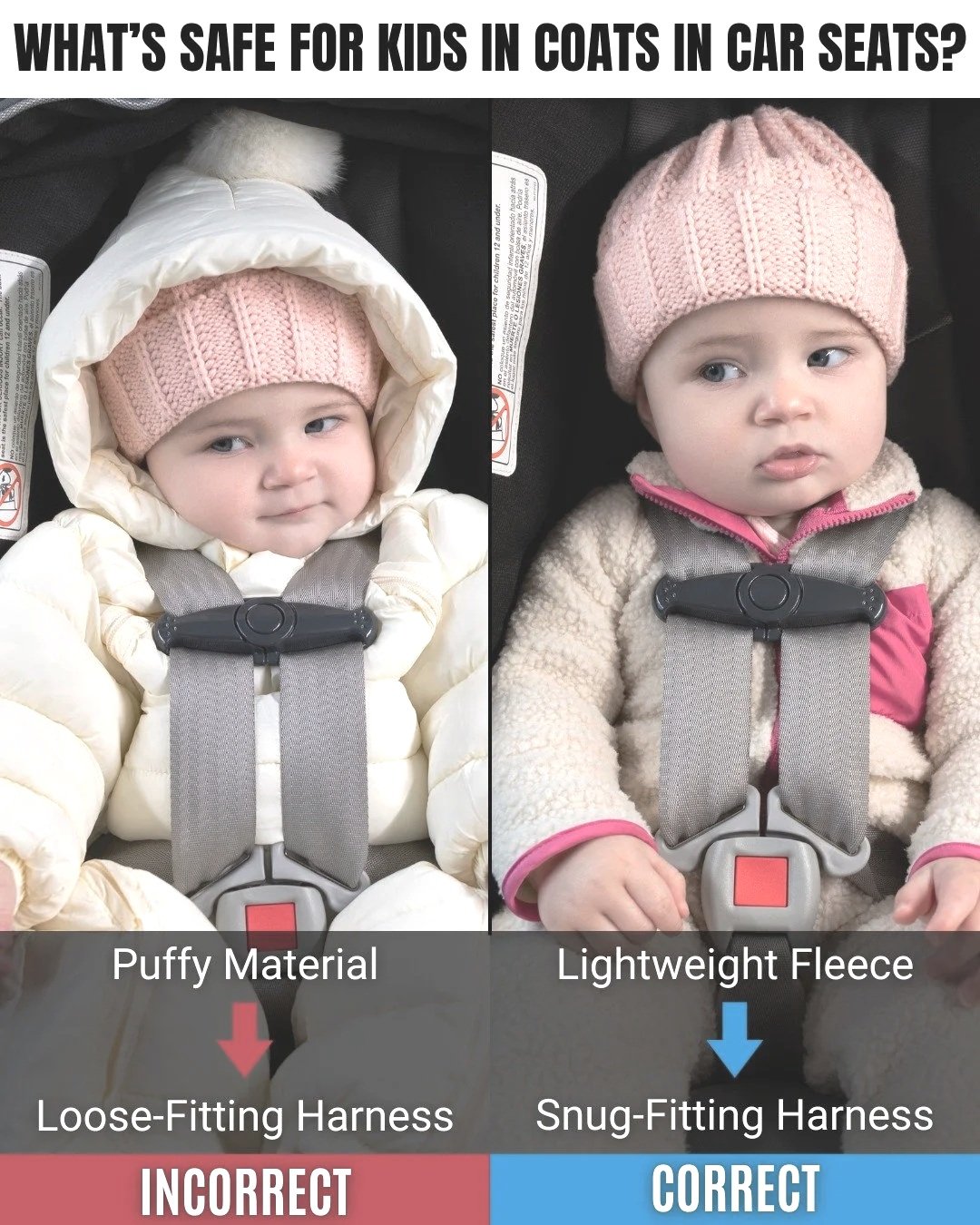
Avoid placing thick clothing or blankets between your baby and the harness, as this can compromise safety. Instead, place a blanket over the harness after buckling them in.
Avoid aftermarket products that haven’t been crash-tested with your specific car seat.
Make it a habit to check the car seat’s fit and condition regularly, as wear and tear can impact safety over time.
5. When to transition to the next car seat
Transition to a forward-facing seat only when your child has outgrown the rear-facing seat, according to the manufacturer’s guidelines. Each step should be taken only when necessary, as rear-facing remains safest as long as possible.
(California Law requires children to be in a rear-facing car seat at least age 2)
Always check the labels on the car seat for weight and height limits.
6. Resources and Support
The American Academy of Pediatrics (AAP) provides up-to-date guidelines on car seat safety.
(California Law requires children to be in a rear-facing car seat at least age 2)
Certified Child Passenger Safety Technicians (CPSTs) are trained to help parents with car seat installation and can answer your specific questions.
Local car seat technicians: Find local car seat technicians here
Register the car seat: Register your car seat here
Report a Safety Problem: Report a safety problem here
Check for recalls: Check for recalls here
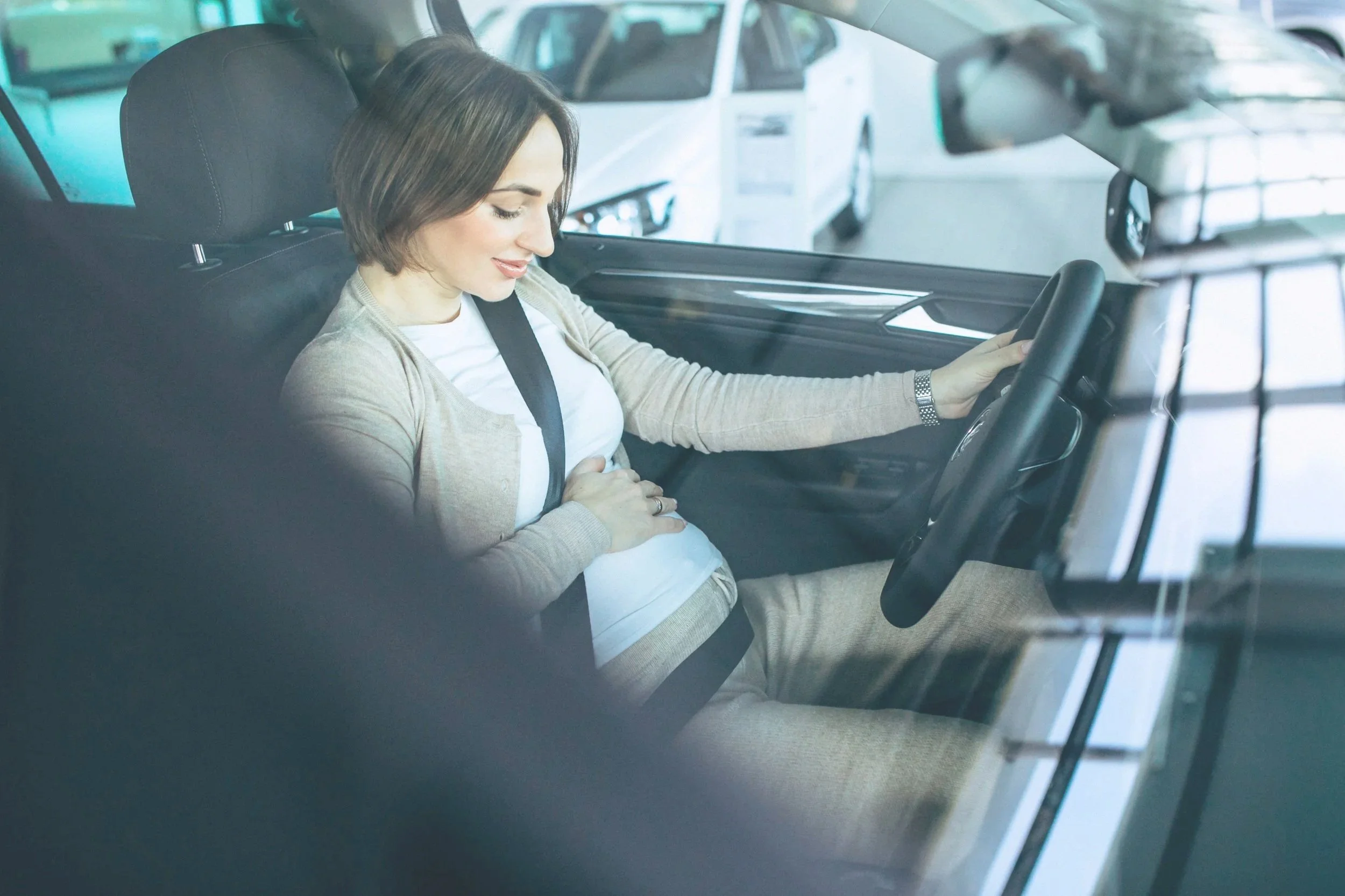
Keeping expectant Moms Safe on the Road
Prenatal safety: How to wear your seatbelt when you are expecting
Cold weather reminder: Winter coats and car seats don’t mix!
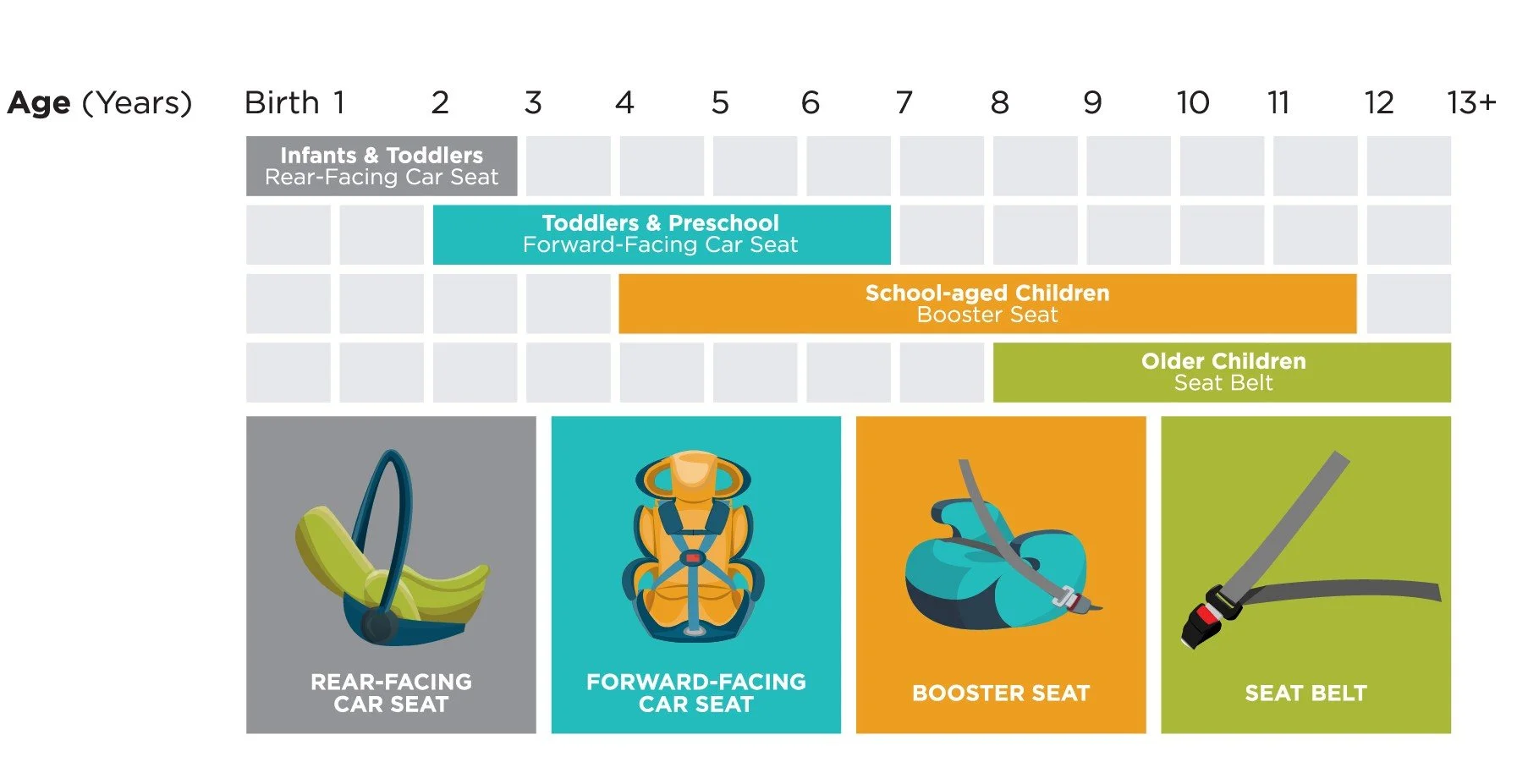
Recommended car seats based on your child’s age and size
(California Law requires children to be in rear-facing car seat at least age 2)

What to Expect at a Car Seat Checkup Event
Many counties across California offer free car seat checkup events for expecting parents and families with babies or older children. These events welcome anyone — whether you’re preparing for your first newborn, already using a car seat, or returning because your child has grown and needs an adjustment. Certified Child Passenger Safety Technicians (CPSTs) don’t just install or adjust the car seat for you — they teach you how to do it yourself with confidence.
This is especially important for parents who regularly move the seat between vehicles or need to reinstall it often.
At these events, CPSTs also provide education on current California car seat laws, help you choose the right seat for your child’s age and size, check for recalls, and make sure your seat is installed correctly.
Some counties even offer free replacement seats when available. Families are encouraged to return as their child grows, transitions to a new seat, or needs a harness or booster adjustment.
Before the Checkup
Prepare to learn how to install and use the car seat yourself.
Know your child’s current weight and height.
Try installing the car seat using its manual and your vehicle’s handbook beforehand.
Bring both the car seat manual and vehicle manual.
If possible, bring your child and another caregiver to help while you learn.
During the Checkup
Verify your technician’s CPST certification.
Expect about a 30‑minute session tailored to your car seat and vehicle.
Learn about proper car seat selection, installation, recalls, and next steps for your child.
Ask questions and practice installing the car seat yourself with guidance.
After the Checkup
Success means you can confidently install and use the car seat correctly — and have all your questions answered.